Study 01 / Publishing
Margin Editions
Three books.
One point of view.
Fictional publisher · Self-initiated concept · Not commissioned
The question
How can a small imprint become recognisable without making every book look the same?
This fictional brief brings three short books about everyday observation into one collection. The reader needs to recognise the publisher, distinguish the subjects, and settle into the longer text.
- Proposed scope
- Identity, cover structure, editorial layout, catalogue.
- Constraint
- Three contrasting titles; one simple imprint signature. No author identities or existing publications borrowed.
Decision 01
Keep the signature. Let the title breathe.
The publisher sits in the same corner. A margin bracket and collection number create continuity. Colour and line breaks give each book its own pace.
A single fixed headline size would make the longest title either cramped or much smaller. The structure therefore fixes the imprint—not every word on the cover.
Margin
Editions
Margin
Editions
Margin
Editions
Decision 02
After the cover, make room for reading.
The display voice becomes quieter inside. A stable measure, clear folios and generous space around the image separate sustained reading from the cover’s job of recognition.
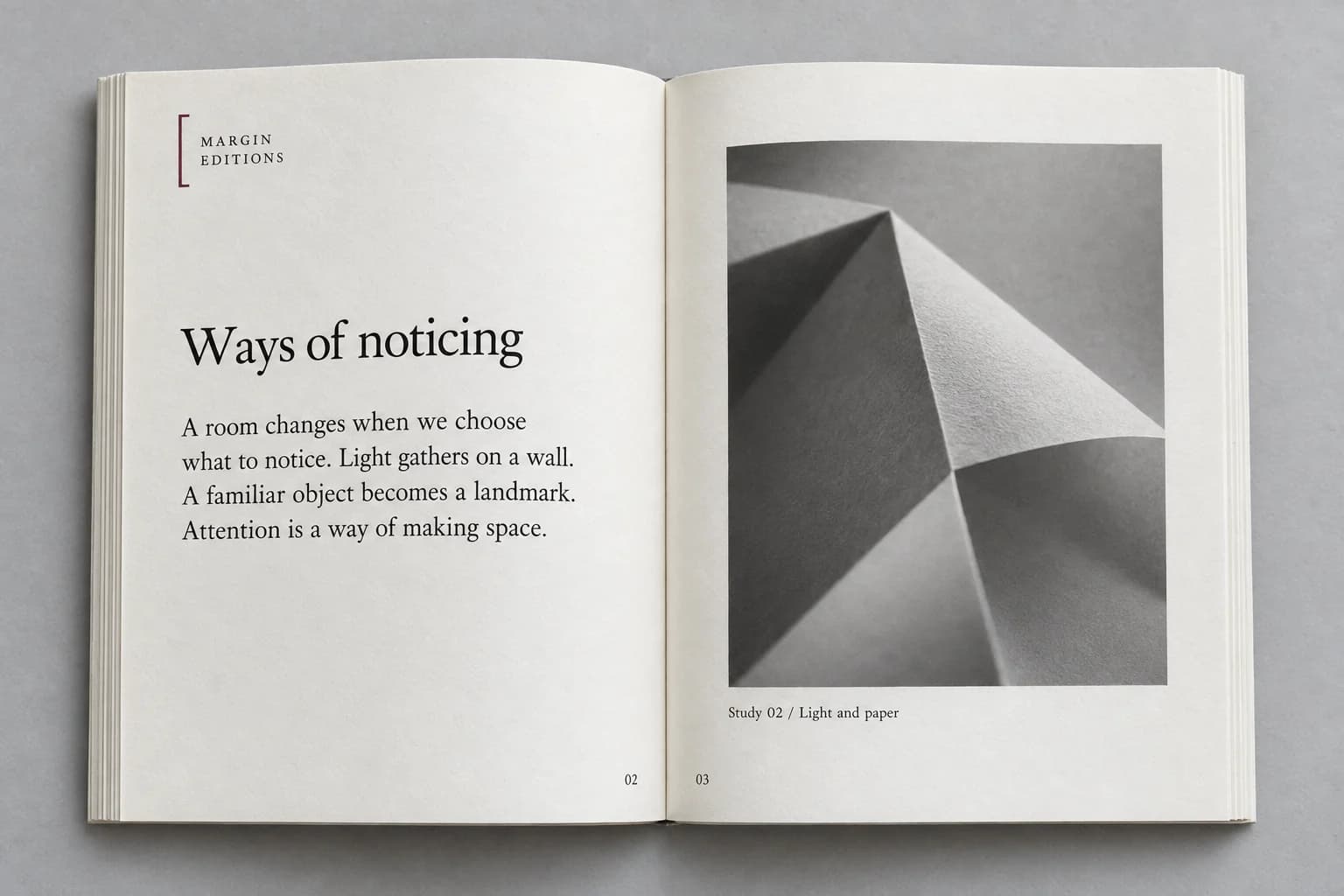
The sample text, outside the mockup
A room changes when we choose what to notice. Light gathers on a wall. A familiar object becomes a landmark. Attention is a way of making space.
Original demonstration text / “Ways of noticing”
Decision 03
A catalogue is a route through the collection.
Number, title and a short description do the practical work. The catalogue uses the same imprint signature but introduces a more navigable structure, rather than enlarging a book cover.
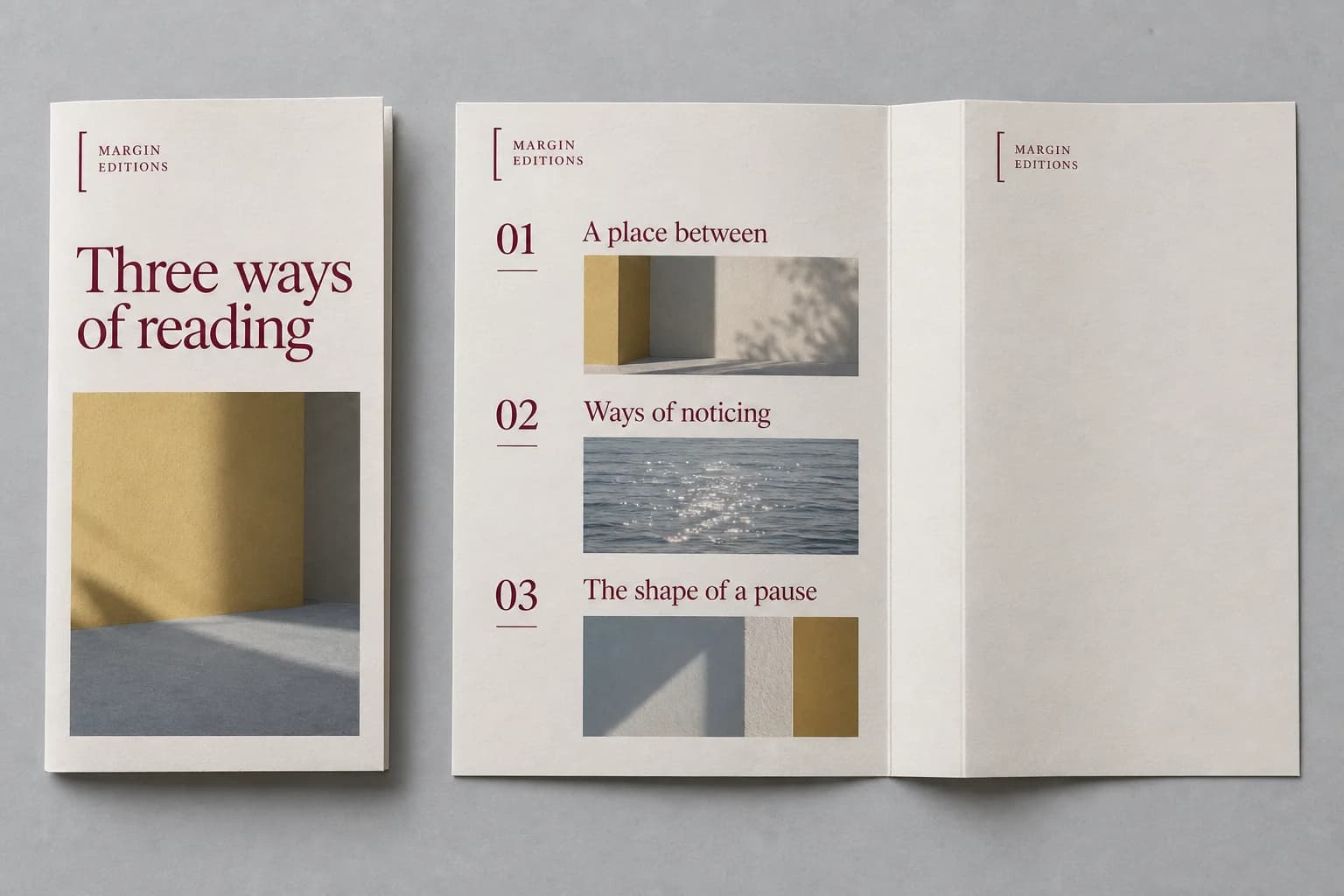
What would need testing next?
Print proofs, binding and gutter allowances, smaller spine sizes, rights clearance and a reader’s ability to distinguish titles on an actual shelf. These have not been validated by a digital mockup.
Contribution & limits
- Created for this demonstration
- Three title treatments, a shared imprint structure, original sample text, a reading-spread concept and a folded-catalogue concept. Editable HTML/CSS title specimens accompany AI-generated presentation images; no finished books exist.
- Actual authorship
- Brief interpretation, sample writing, design direction, editable web specimens and website implementation: Codex AI for the A&H project. Presentation mockups: OpenAI image generation. No external studio or client contributed work.
- What this does not establish
- Concept work. Not commissioned or launched; no commercial outcomes measured. Mockups are not print-ready artwork, manufactured books, a delivered campaign or evidence of an event.